The Geological Net Zero Principle
Restoring the balance between carbon extracted from the subsurface and carbon durably sequestered.
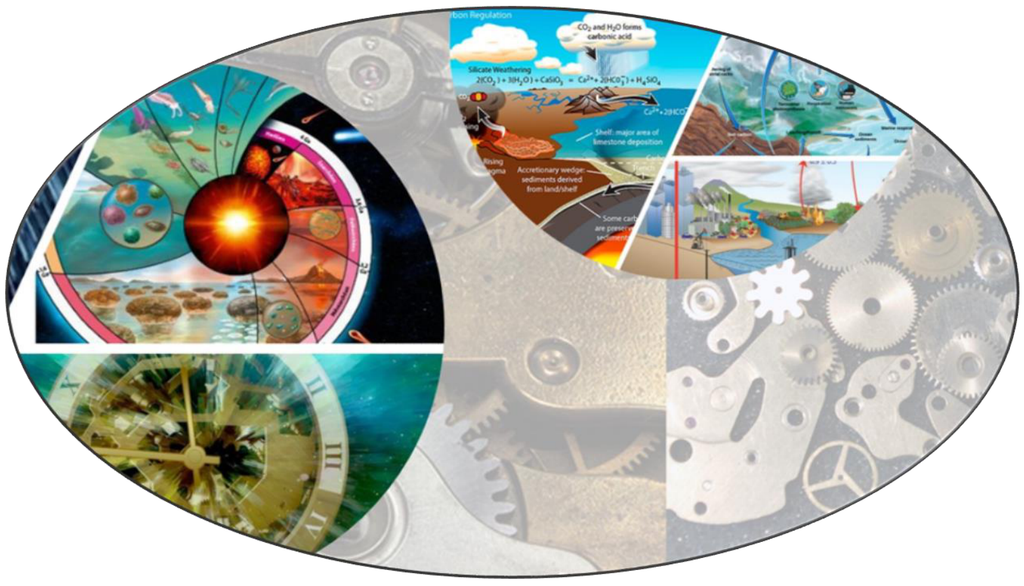
A Fundamental Imbalance in the Carbon Cycle
Since the Industrial Revolution, the extraction of coal, oil and natural gas, together with the industrial processing of carbonates, has transferred carbon accumulated in geological formations over millions of years into the atmosphere, oceans and biosphere.
These transfers far exceed the rate at which carbon naturally returns to geological reservoirs and are a major cause of climate change. Geological Net Zero proposes addressing the source of this imbalance: the depletion of geological carbon stocks.
The GNZ Balance Target
The Geological Net Zero (GNZ) Principle can be expressed simply:
At GNZ balance, every quantity of geological carbon extracted must be matched by an equivalent quantity of carbon geologically sequestered within the same year.
This balance must be achieved progressively, along a pathway consistent with the global carbon budget and accompanied by reduced dependence on fossil resources. Equivalence is assessed by mass of carbon, based on a verified net carbon balance and strict requirements for storage permanence. The Principle aims to establish accountability for extraction and accelerate defossilization.
Responsibility from Producer to Consumer
Geological carbon can be identified and quantified at extraction, before industrial processing and distribution. The GNZ Principle therefore places initial responsibility with producers of coal, oil and natural gas, as well as industries using geological carbon in their processes: cement and lime production, glassmaking, iron and steel production, metallurgy…
This responsibility extends along value chains: processors, distributors, industrial users and final consumers. Its allocation must reflect each actor’s role, influence and capacity to act, including the information and alternatives available to consumers.
Producers do not necessarily have to carry out sequestration themselves. They must, however, ensure that carbon entering the economy is associated with an identifiable obligation, with clear arrangements for how it is assumed along the chain.
Responsibility thus begins at extraction and follows carbon through the economy.
Geological Carbon Traceability and Accounting
Implementing the GNZ Principle requires accounting for the quantities of carbon extracted, processed, traded and durably sequestered, as well as associated emissions. This accounting must track the corresponding obligations, including when carbon flows are mixed.
It distinguishes three stages: the creation of an obligation at extraction, its possible transfer between actors, and its discharge through sequestration that has actually been carried out and verified against permanence and net carbon balance criteria.
Transferring an obligation does not mean fulfilling it. An obligation already fulfilled must not be imposed again on the same quantity of carbon.
The GNZ Pact is intended to organize the practical arrangements for this traceability, accounting and verification.
Balancing Flows and Addressing the Accumulated Excess
The GNZ Principle sets a balance target between carbon extracted from geological reservoirs and carbon durably returned to them. Carbon Dioxide Removal (CDR) refers to processes that remove CO₂ from the atmosphere and store it durably.
CDR can contribute to GNZ balance when it delivers geological storage meeting the required criteria. Addressing the historical excess of carbon also requires going beyond the balance of current extraction.
Accounting must therefore distinguish storage that fulfills obligations associated with current extraction from storage that contributes to reducing the historical excess.
Reducing fossil resource extraction and developing sequestration capacity must proceed simultaneously.
From the GNZ Principle to the GNZ Pact
The GNZ Pact proposes organizing cooperation among producers, processors, consumers, farmers, foresters, storage operators and public authorities.
It aims to translate the Principle into concrete commitments: allocation of responsibilities, financing, accounting rules and verification, in support of restoring the geological carbon balance.
Foundational Paper (2021)
For a detailed presentation of the original Geological Net Zero proposal and its proposed international framework, see “Geological Net Zero”: A Proposal for a Simple and Globally Effective International Agreement on Fossil Carbon (COP26, 2021).